
dupes.

A news article in 2024 talked about the silent war that’s happening in the perfume industry.
It’s silent because it happens behind closed doors, and it’s not an all out war, more a series of raids. As soon as a new perfume hits the shelves, the big perfume producers buy a bottle and have it analyzed in their labs. In a matter of hours they can have a pretty comprehensive list of the materials in the flacon.
If it appears that the pong is selling in quantity (and this sort of data is closely monitored) the rival houses might direct their perfumers to make a similar -but not identical- version. This may be licensed to a fashion brand, manufactured, and sent to the shops in the hope of getting a slice of that lucrative pie which is modern perfume.
Everybody knows what’s going on but nobody complains, and the reason is they’re all doing it.
From the news report you’d think it was a new phenomenon. But in 1980, the perfume composer Edmond Roudnitska had already complained that perfumes are ‘outrageously and impecuniously copied several times as soon as they reach the market’.1 That’s because in 1975, the court of appeal in Paris ruled that -unlike music or writing- perfume is not the work of a human mind and so isn’t covered by copyright law. Which is incredible but true.
As a result, perfumery became a Wild West. Rustling was fair game, except its wasn’t beef cows but perfumes being lifted from under the noses of the owners.
~~~ ~~~ ~~~
In perfumery school, perfumers are trained to recreate classic perfumes by using their sniffing skills and trial & error. The art students you see drawing in museums are doing a similar thing, learning how the old masters achieved their effects by copying them. So when GCMS2 came along, which can break down a perfume into its component molecules and print them out on a graph, decrypting a perfume became child’s play. Perfumers now had their own Colossus, the proto computer that helped Bletchley Park crack the coded signals of the Nazi war machine.
At the turn of the twentieth century, Jacques Guerlain would lock his formula book in the vault knowing it was safe from prying eyes. But by the mid 1960’s this was looking kinda quaint. With the advent of GCMS, the key to a perfume’s formula could be found in every bottle.
~~~ ~~~ ~~~
Perfumers could now decipher their rival’s secrets with ease, and once a perfume can be broken down and run up again in a matter of days, the incentive to create new and original works begins to wane. If that’s the case why bother creating new ideas? They might be no good, or if they are good, every Tom Dick and Harry can soon discover how they’ve been done and compose their own version.
The reality is, if it’s profits you’re after, it’s much easier and quicker -and surer- to copy the latest big hit and add your own bells and whistles.
These decorative elements serve two purposes. They are first of all a fig leaf to hide all the plagiarism that’s going on. Secondly, they give the punter a reason to buy your version of the formula, as opposed to the one being offered by your rivals. But, as a consequence, the whole USP of your product becomes a tweak to a commonly used formula; an original nuance — nothing more: perfume becomes samey…
The big perfume makers are not just chasing each other’s tails -as Luca Turin puts it- they are chasing their own. At the last account there were 37 versions of La Vie est Belle, which amounts to 36 lost opportunities of doing something different. Flankers have become an epidemic in recent years … copies of copies of copies. But apparently these are legit, because -being made by the same company- they all flow from the same cash cow.
~~~ ~~~ ~~~
Not only has creativity taken a nose dive in recent years, the quality of the perfume produced has also gone down. This won’t be news to anyone who knows vintage perfume; modern perfume often seems thin by comparison to the old stuff. According to Luca Turin (again), who was interviewed for the article on sky news.com3 the cost of the juice in the average bottle of perfume is about $1. If that bottle is 100ml of Eau de Toilette, which sells for -let’s say- $200, the juice would amount to 0.5% of the retail price. Adding in the cost of the bottle, the packaging, distribution, the retailer’s cut and other overheads (let’s forget the marketing budget, which can run into millions but isn’t part of the actual perfume cost) the profit margin appears to be enormous; a situation that’s bound to attract entrepreneurs.
The tycoon Alan Sugar, who appeared in the British version of The Apprentice, once set his hopefuls the challenge of making and selling perfumed soap. One likely contender did an Ernest Beaux and put an overdose of sandal into his formula. It was apparently a great smell. But even at £10 a bar in the 2010’s, it lost a wedge of money and the candidate was fired. ‘The idea’s not to make a good smell, it’s to make good money’ — Sugar might have told the poor guy as he was shown the door. How many industry bosses would disagree with that?
Of course you don’t have to be a tycoon to try your hand at the smelling game. As many artisans and niche brands have shown, brass neck and a spare room are enough to get you started. But that doesn’t mean you’ll succeed. As well as chutzpah, ideas are necessary — and good ones are hard to find, something that’s demonstrated by the high number of perfumes that have failed over the years.
~~~ ~~~ ~~~
As well as niche houses and indie perfumers, there is another class of entrants into the world of perfume making, dupe houses. As entrepreneurs will do, they have spotted a gap in the market. Their MO is to exploit a weak point in the model of mass perfumery — price. Where a designer pong could set you back two, three or even four hundred dollars, the dupe might sell at forty.
These pirate perfumers make dupes ‘inspired by’ famous perfumes. But, because of limitations on their budgets and access to captive molecules, as well as possibly limited perfumery skills, the pirates’ cut & pastes won’t be identical to the famous names. They are sometimes said to be close though.
And given the fact that a decent smelling dupe can be had for small money, it should be no surprise that some buyers might prefer a scent that’s close to the real thing - but costs a fraction of the price.
And there’s a ready market for their products, one dupe house is reported to have turned over four million dollars in the first year of trading.
~~~ ~~~ ~~~
Making a copy of another’s perfume is plagiarism, there’s no doubt about that. Copying the work of another person without permission, compensation or even recognition is immoral — it’s theft of intellectual property.
So, if copying is wrong, how can Ariana Grande’s Cloud be any less immoral than Monte Carlo by noted.aromas? They are both bootlegs of Baccarat Rouge 540.
Apart from the quality and the price, the main difference between them is that Cloud is made by an industry insider that has ripped off Francis Kurkdjian - but doesn’t acknowledge the fact, and Monte Carlo is produced by an industry outsider who has ripped him off - and admit to it on their website.
I assume neither are paying royalties, but Kurkdjian has no legal redress because he cannot assert his rights as author of the BR540 odor profile.
~~~ ~~~ ~~~
At one time, perfume was an affordable luxury. It was destined for those who wanted a couturier dress but couldn’t afford it and brought home a bottle of scent instead.
With prices sky rocketing, it’s now the case that some can no longer afford this ‘affordable’ luxury. So it’s wrong to criticize people for buying bootleg perfume — in the same way that it’s not the shoppers’ fault if discount supermarkets sell cut price brands that look like market leaders.
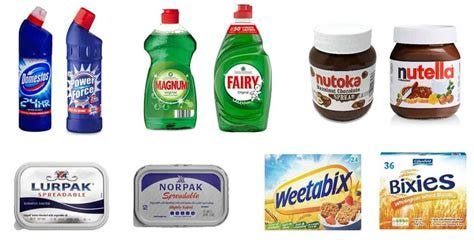
Bootleg perfume, off brand products: they are essentially the same thing. What they show is that a similar product can be sold more cheaply. And in the case of perfume, much more cheaply; a sure sign of excess profit in the system.
~~~ ~~~ ~~~
I recently smelled a new perfume that’s priced around $300 but smells like a rerun of a popular fragrance from the 2000’s. That’s to say: a twenty year old idea, which has been made with synthetics, and is therefore a cheap formula.
This is only one example, but it is symptomatic of the confluence of creative stagnation, exorbitant pricing and mediocre quality that characterizes part of the perfume industry.
In a situation where an industry appears to be taking its customers for granted, is it any surprise that those who think they are getting poor value for money will turn to a cheaper source?
If this trend continues, and the dupe houses become a challenge to the perfume corporations, the question will arise — did they bring it on themselves?
~~~ ~~~ ~~~
Le parfum, Roudnitska.E (1980) Presses Universitaires de France, Paris
https://en.wikipedia.org/wiki/Gas_chromatographyE2%80%93mass_spectrometry
https://news.sky.com/story/this-is-the-silent-war-the-perfume-industry-wont-tell-you-about-13288116
Thank you for this article
Very interesting article! How can I be sure I’m getting the ‘authentic’ scent? And it’s so true that modern scents seem ‘thin’. They seldom linger, while a spritz of my old Tresor lasts and lasts.