
Poison had a Sister
But she's been forgotten

Before we find out who this forgotten sister was, we should figure out who the big sister was.
Poison was composed in 1985, on that everyone agrees (everyone being Basenotes, Fragrantica and Parfumo, the three big amateur perfume websites).
But they don’t agree on who the perfumer was: Basenotes says it was Jean Guichard, Parfumo thinks it was Jean Guichard and Edouard Fléchier, and Fragrantica points the finger at Edouard Fléchier who—they say—was helped by Maurice Roger. Roger was CEO of Parfums Christian Dior at the time and so was probably involved in some way or other, possibly as art director and the overall head of project, a sort of Frédéric Malle or Serge Lutens figure, or even a Tom Ford.
In the secretive world of perfumery, where the facts are not easy to find, working out who the perfumer was is not that simple.
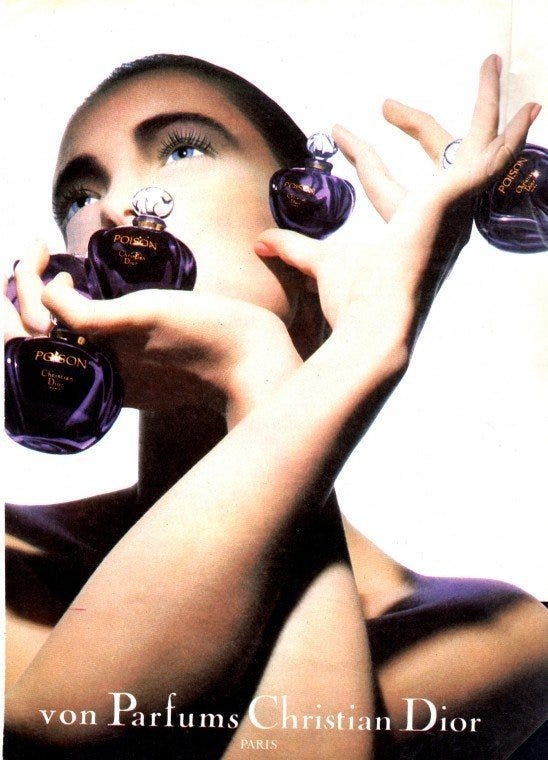
Saying Poison had a sister could be written off as wild conjecture, but even the identity of her father is open to debate. So, for now, let’s stick to what we do know.
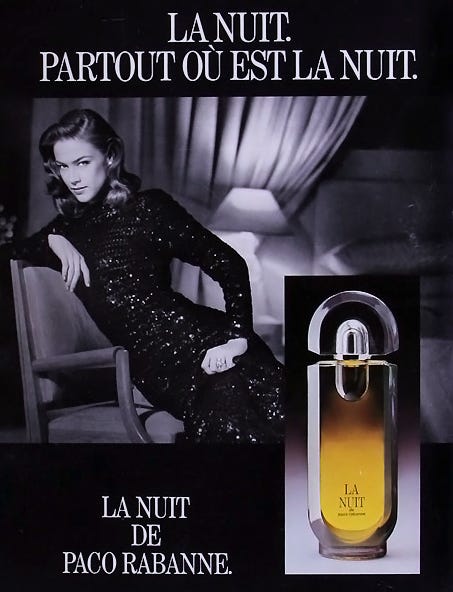
La Nuit was released by Paco Rabanne in 1985.
Basenotes, Parfumo and Fragrantica all agree it was created by Jean Guichard. Fragrantica also credit Puig’s resident perfumer at the time, Rosendo Mateu, as working on the project; this is reasonable, Paco Rabanne is one of the biggest names in the Spanish company’s stable.
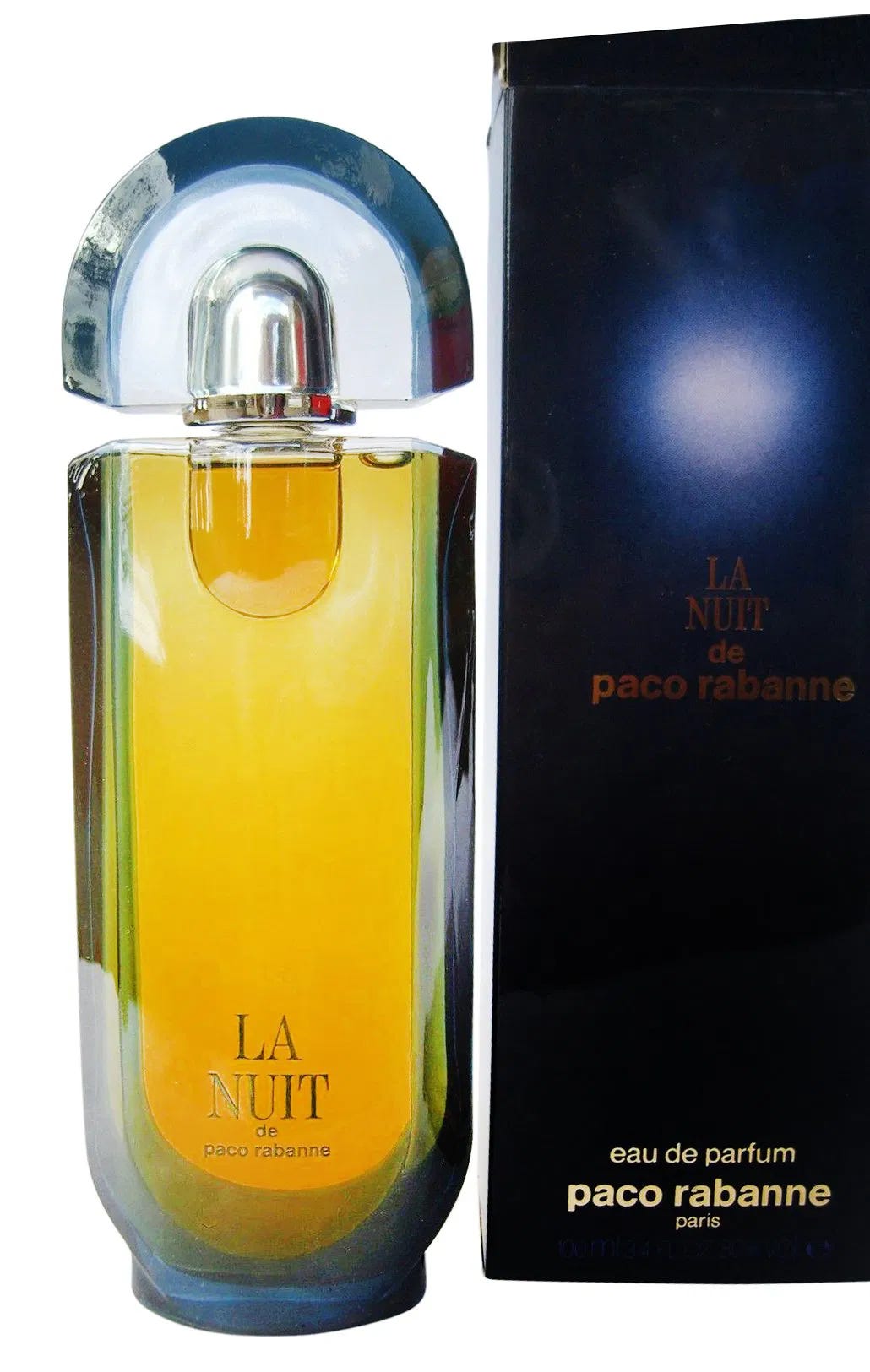
We are told that Jean Guichard created La Nuit. And with Obsession (1985) Parfum de Peau (1986) and LouLou (1987) in his catalog, his known style is a match for Poison.
It’s possible that Eduard Fléchier assisted with Poison but there is nothing comparable in his oeuvre to suggest he had much influence on it.
So, with Rosendo Mateu being named on La Nuit, it’s also possible that this was a pattern and Guichard created Poison with the help of Fléchier.
So much for the author. Now let’s look at the published data for the two perfumes.
Here’s the note pyramid for Poison :
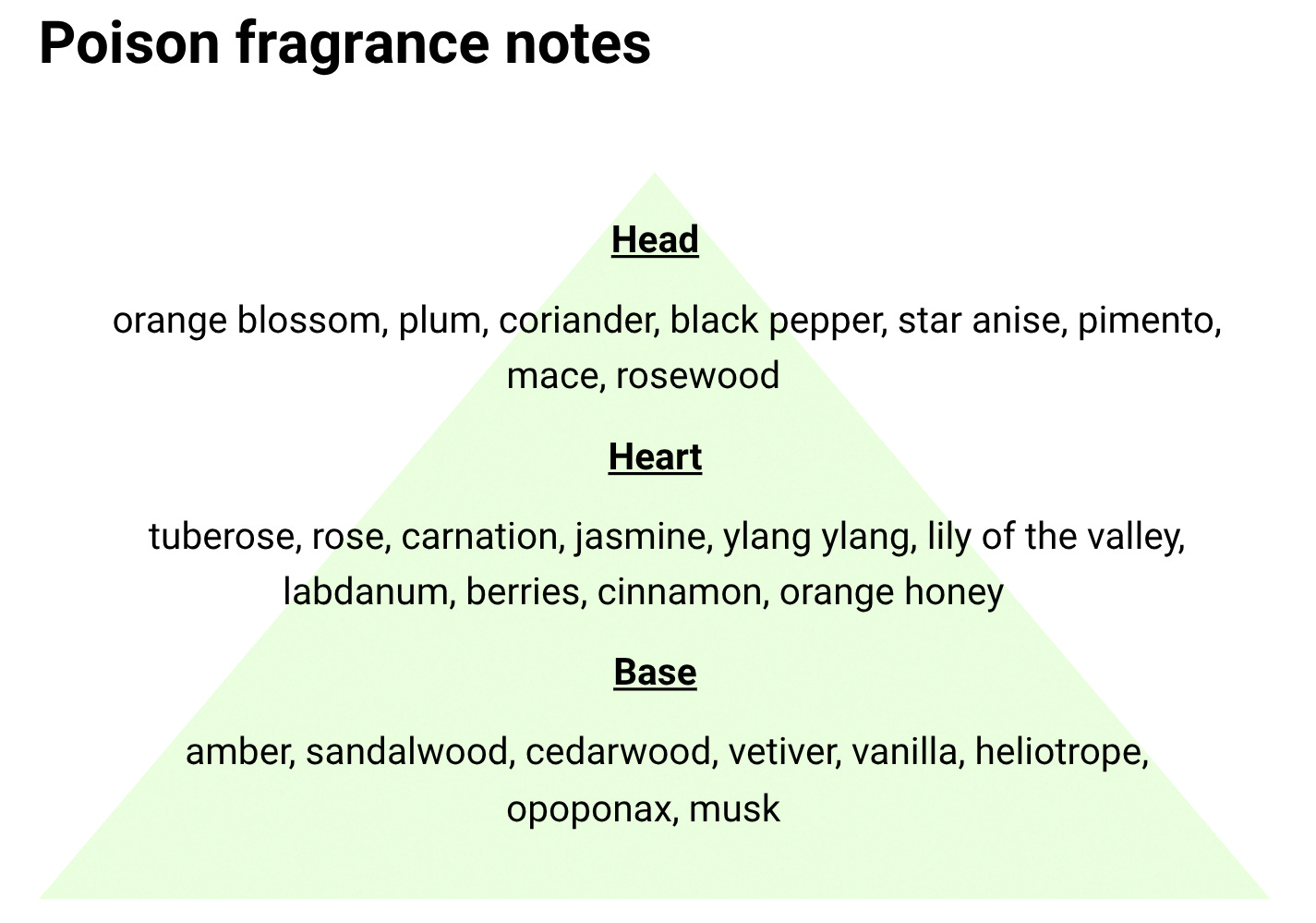
The other sites concur with this except for some slight differences, eg mace and pimento instead of incense.
Poison is a very complex and distinctive perfume, so it wouldn’t be a surprise to find that La Nuit looks different on paper.
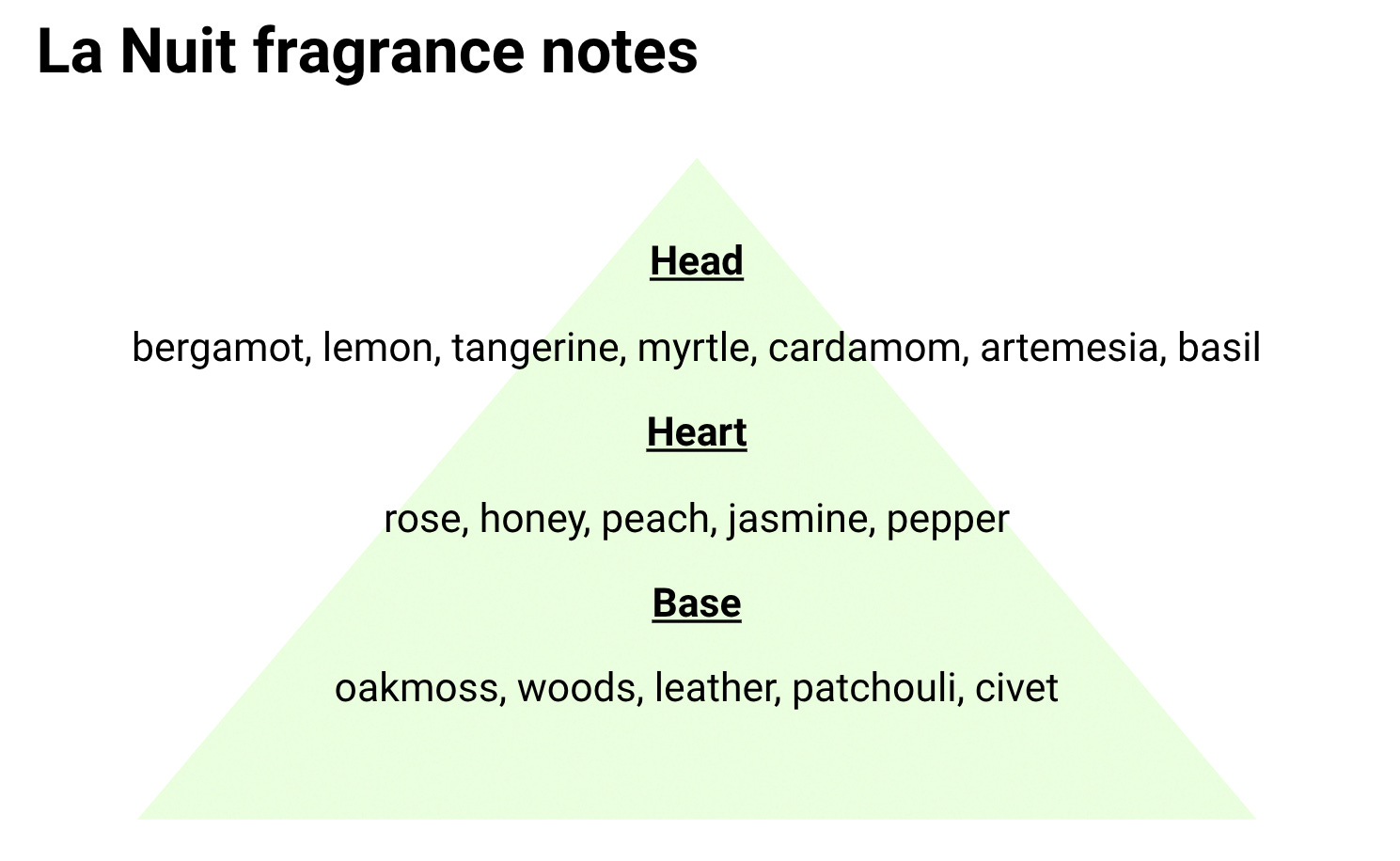
Sure enough, there aren’t many notes in common so it would appear that—on the surface—these are different works. But comparing two note pyramids is not the same as comparing the odor of two perfumes.
That’s what we’ll do now.
Poison Esprit de Parfum V La Nuit Eau de Parfum, vintage boxed samples :
(If you don’t want to follow the details of their evolutions, skip this section and go to the conclusions.)
0h
They are similar woody Chypres but the details differ; where Poison is sweeter and more fruity - and has a cool overtone, La Nuit is drier, warmer, more animal and sharper.
1h
Poison : Scintillating top notes of glacial incense supported by a sweet and sour fruity-floral; aromatics, woody notes.
La Nuit : dusty cold incense and woods, a restrained heart of syrupy sweetness, a barely there bouquet.
There’s a greater sense of fullness in Poison, it’s a more complete work.
Where Poison is declamatory, La Nuit feels subdued.
3h
With unctuous sweetness and a dry piquancy Poison looks forward to Féminité du bois (1992). La Nuit, by contrast, with its old school dried flowers and syrup harks back to Magie Noire (1978).
7h
Poison’s base notes are oriental; sweet-ambery, sweet-powdery, balsamic. There’s a hint of acid fruitiness - which is to be expected as fruity notes are mainly synthetic, linear and durable (which explains why they’re paired with patchouli in the Fruchouli). The cold aloof overtone persists.
Surprisingly, there’s a greater sense of florals than before. Now that the profile has thinned out a bit, jasmine and orange flower can be felt, the first which adds a sense of creamy sweetness and the latter’s indole augments the crackly pepper. This is further underlined by the spicy resin of opopanax.
It’s a complex but coherent set of base accords which are both airy and sensual at the same time. An amazing feat.
La Nuit : an ill structured dusty sweet sourness. The mind is drawn to the Parfums fourrures of the 20’s.
Conclusions :
This faded grande dame in a fur coat is far removed from the cult of Poison, which took 80’s Goth subculture and make it its own. But, like a dead bouquet gathering dust in a forgotten boudoir, La Nuit has it’s own Baudelarean appeal.
These two scents are based on the same kind of woody Chypre structure, which is combined with more or less amounts of Amber. There is a distinctive sharp—sweet contrast that’s common to the early stages of both, and both contain a late-flowering floral heart that’s evident in the base, an unusual feature that displays the kind of technical skill I’ve only otherwise found in the work of Coty.
Apart from that the decorative details are different.
The similar core structures and thematic contrasts, and the technical mastery of florals seen in both works suggest they were made by the same perfumer. Judging by what we learn from the parfumista sites, it was most likely Jean Guichard who fathered them.
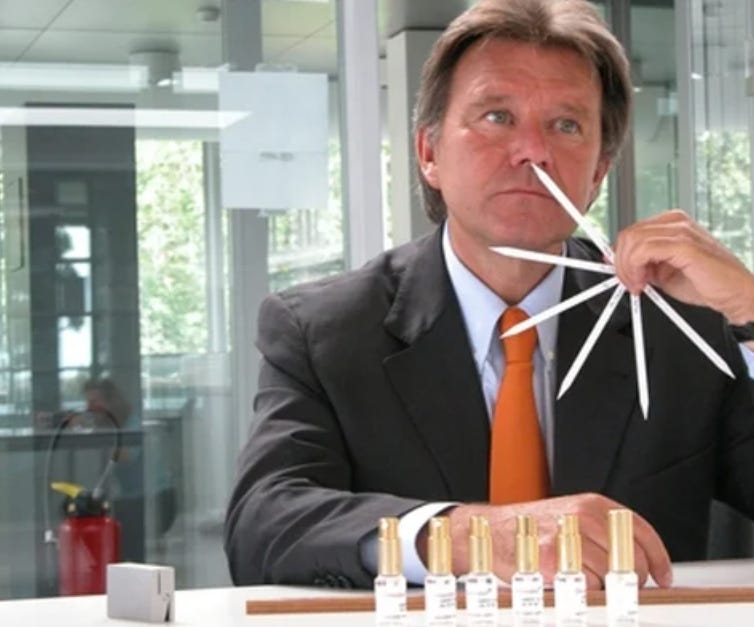
If so, why did he make two frigid woody feminines?
He may have been exploring his idea, turning the subject this way and that, trying to find new angles; just as Roudnitska did with rotting melon, and Ellena riffed on cardamom—citrus.
Anyway, of the two related but different sisters here, Poison is magisterial, La Nuit introvert and sensual.
And I wonder, how many others there were that didn’t come to fruition?
Interesting. Great sleuthing. I wouldn’t have linked these two previously. Now I want to smell Poison again to compare. Poison felt louder in the white floral department.